Certification for Medical Assistant: Your Complete Guide in Montgomery
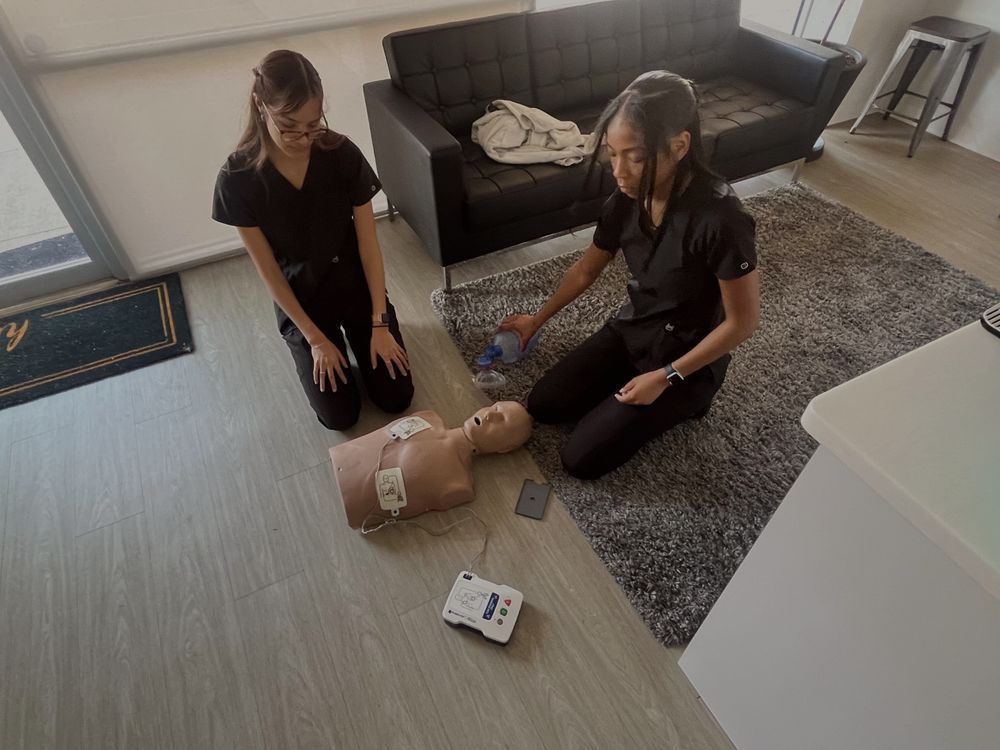
Certification is what separates a trained medical assistant from a verified medical assistant. It tells every employer who reads your resume that your clinical and administrative skills have been independently tested and confirmed — not just that you completed a program, but that you can actually do the job.
If you’re evaluating medical assistant training in Montgomery, understanding what certification means, why employers care about it, and how to earn it will help you choose the right program and set up the strongest possible start to your career.
What Is CCMA Certification?
The Certified Clinical Medical Assistant (CCMA) credential is issued by the National Healthcareer Association (NHA) and is one of the most widely recognized certifications in medical assisting. It tests competency across both clinical and administrative domains — the full scope of what a medical assistant does on the job.
The certification process involves:
- Completing an approved medical assistant training program — this establishes your eligibility to sit for the exam
- Passing a comprehensive written exam — covering clinical procedures, patient care, administrative tasks, medical terminology, anatomy and physiology, pharmacology basics, and professional conduct
- Meeting any additional requirements — such as CPR certification, which most training programs include
Once certified, you carry the CCMA designation — a credential that employers across the healthcare industry recognize and value.
Other Medical Assistant Certifications
The CCMA is the most common, but it’s not the only option:
| Credential | Issuing Organization | Focus |
|---|---|---|
| CCMA | National Healthcareer Association (NHA) | Clinical and administrative |
| CMA | American Association of Medical Assistants (AAMA) | Clinical and administrative |
| RMA | American Medical Technologists (AMT) | Clinical and administrative |
All three are respected by employers. The CCMA is often preferred for graduates of focused training programs because the NHA exam aligns well with career-specific curricula.
Why Certification Matters for Your Career
Employers prefer it — and increasingly require it
When a hiring manager has two candidates on the desk — one certified, one not — the certified candidate has a verified skill set. That reduces the employer’s risk and speeds up the hiring decision. Many job postings now list CCMA certification as preferred or required.
It directly affects your pay
Certified medical assistants consistently earn more than non-certified peers:
- Certified (CCMA): approximately $42,000–$50,000/year
- Non-certified: approximately $34,000–$40,000/year
- Typical premium: $1–$3/hour more, which translates to $2,000–$6,000 annually
Over a five-year career, that premium adds up to $10,000–$30,000 in additional income — from a certification earned during your training program.
It speeds up the hiring process
Certified candidates spend less time proving they can do the job during interviews. The credential does that for them. Employers can make faster hiring decisions, and certified candidates typically start working sooner after graduation.
It provides career mobility
CCMA certification is nationally recognized. If you move to a different city or state, your credential travels with you. You don’t need to re-certify or start over — your verified skills are portable.
It opens doors to advancement
Certification signals professional commitment. It positions you for lead medical assistant roles, specialty practice positions, office management opportunities, and clinical coordinator roles as your career develops.
What the CCMA Exam Covers
The NHA CCMA exam tests knowledge and competency across these domains:
Clinical content
- Vital signs measurement and documentation
- Phlebotomy — venipuncture technique, specimen handling, tube order of draw
- Injections — intramuscular, subcutaneous, and intradermal administration
- EKG/ECG — lead placement, running a 12-lead, recognizing artifacts
- Point-of-care testing — urinalysis, blood glucose, rapid tests
- Infection control — sterilization, PPE, OSHA compliance
- Patient preparation and positioning for examinations
- Wound care and basic clinical procedures
- Medication administration fundamentals
Administrative content
- Medical terminology and anatomy/physiology
- Electronic health records (EHR) documentation
- Scheduling, patient flow management, and front-office operations
- Insurance verification and basic billing procedures
- HIPAA compliance and patient privacy
- Professional communication and ethics
Exam format
- Multiple-choice written exam
- Administered at authorized testing centers or through proctored online testing
- Results typically available within a few weeks
- Certification requires renewal through continuing education
How to Prepare for Certification
The most effective preparation happens when exam content is integrated into your training from day one — not crammed into the final week.
At Montgomery Medical Assistant School, CCMA exam preparation is woven throughout the entire 18-week curriculum. Each module covers content that appears on the exam, and practice questions reinforce that content throughout the program. By graduation, you’ve been preparing for months.
Key preparation strategies:
- Practice clinical skills repeatedly — the exam tests knowledge, but confidence with physical skills (phlebotomy, injections, EKGs) reinforces that knowledge
- Use practice exams — familiarize yourself with the question format and time constraints
- Review medical terminology regularly — it appears across every exam domain
- Study anatomy and physiology fundamentals — these underpin clinical procedures
- Don’t wait — take the exam within 2–4 weeks of completing your program while the material is fresh
Common Concerns About Getting Certified
“Is the exam difficult?” It’s comprehensive, but absolutely achievable with proper preparation. Programs that integrate exam prep throughout the curriculum — rather than adding it at the end — produce significantly higher pass rates.
“How much does the exam cost?” The NHA CCMA exam fee is typically around $155. Some training programs include the fee in tuition — ask before you enroll.
“Do I really need certification?” Legally, requirements vary by state and employer. Practically, certified medical assistants get hired faster, earn more, and have stronger career trajectories. The return on investment is clear.
“What if I don’t pass the first time?” Retakes are available. But the best insurance against that scenario is choosing a program that builds exam readiness into every week of training.
Get Certified Through Montgomery Medical Assistant School
Montgomery Medical Assistant School in Montgomery offers an 18-week medical assistant program with CCMA certification preparation built into the curriculum. Hands-on clinical training in real medical offices, externship placement, and career readiness support are all included.
- See the full program: Program details
- Review tuition and payment plans: Tuition
- Talk to our team: Contact us
- Apply today: How to apply
You're only a few months from the medical assistant career you deserve.